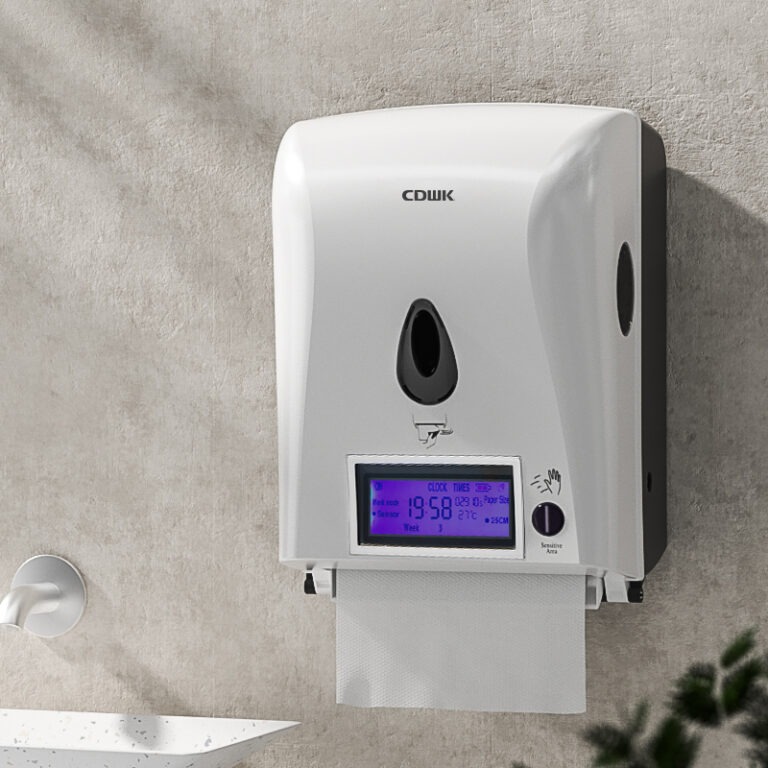
Choosing a paper towel dispenser for a commercial restroom is not simply a matter of selecting the right material. Facility managers also need to decide how the dispenser should operate.
Manual dispensers require users to pull or take a towel themselves, while touchless models use sensors or electronic mechanisms to dispense paper automatically. Both options can be built with stainless steel and both have advantages depending on the environment.
Understanding the differences can help businesses select the most practical system for their restroom.
How Manual Dispensers Work
Manual dispensers provide paper towels through a simple mechanical or pull-based mechanism. The user takes the towel directly from the dispenser without needing batteries, electrical connections, or sensors.
This simplicity can be a major advantage.
Manual systems generally have fewer electronic components, which can make them easier to operate and maintain. They can also be suitable for facilities that want to keep installation and equipment costs straightforward.
Advantages of Manual Models
Simple Operation
There are no sensors or electronic controls to learn. Users simply pull or take the towel.
No Electrical Power
Many manual systems do not require batteries or a power connection, which can simplify installation.
Straightforward Maintenance
Maintenance staff mainly need to refill the dispenser and keep the exterior clean.
Suitable for Many Locations
Manual dispensers can work in offices, restaurants, schools, workshops, and other environments where straightforward operation is preferred.
How Touchless Dispensers Work
Automatic dispensers use sensor technology to detect the user’s hands and release a predetermined amount of paper. This allows the user to receive a towel without physically touching the dispenser.
Touchless dispensing has become increasingly common in commercial environments, particularly where facilities place a strong emphasis on hygiene.
Some modern systems can also control sheet length and dispensing settings to help manage consumption.
Advantages of Touchless Models
Reduced Contact
Users do not need to touch the dispenser housing or a mechanical lever. This can be useful for facilities focused on reducing shared touchpoints.
Modern User Experience
Sensor activation provides a convenient and modern experience, particularly in healthcare, hospitality, and premium commercial environments.
Controlled Dispensing
Certain automatic systems allow facility managers to adjust dispensing settings, potentially helping control paper usage.
Which Is More Hygienic?
Touchless systems have an obvious advantage when minimizing contact with shared surfaces is a priority. Some automatic stainless steel dispensers are specifically designed for healthcare and high-traffic commercial environments with touch-free operation.
However, hygiene depends on the entire restroom system. Regular cleaning, proper handwashing, correct paper storage, and timely maintenance remain important regardless of dispenser type.
Which Is Easier to Maintain?
Manual models are generally simpler because they do not depend on sensors, batteries, or electronic components.
Automatic models can require additional maintenance, including battery replacement or attention to sensor performance. However, many modern automatic units are designed to simplify servicing and provide reliable operation.
The best choice depends on whether the facility prioritizes simplicity or touch-free functionality.
Which One Is Better for High-Traffic Restrooms?
Both can work in high-traffic environments. The choice depends on the facility’s priorities.
A manual system may be ideal when simplicity, lower equipment complexity, and easy maintenance are the main goals.
A touchless model may be more appropriate for hospitals, airports, hotels, healthcare facilities, and premium commercial spaces where minimizing contact is particularly important.
Stainless Steel Makes Sense for Both
Regardless of operating mechanism, stainless steel can provide a durable housing for commercial use. It is commonly used in washroom equipment because it offers resistance to moisture, impact, and everyday wear.
When choosing a unit, check the material grade, finish, mounting method, capacity, and compatibility with the paper towels used by the facility.
How to Choose the Right Option
Ask these questions before purchasing:
- How busy is the restroom?
- Is touch-free operation important?
- Is electrical power available?
- How often can staff perform maintenance?
- What paper towel format will be used?
- Is the dispenser wall-mounted or recessed?
- Does the facility need a lockable housing?
- What capacity is required?
For businesses comparing different commercial options, this collection of stainless steel paper towel dispenser products can help identify suitable configurations.
Conclusion
There is no single dispenser that is perfect for every commercial restroom. Manual models offer simplicity and straightforward maintenance, while touchless systems provide a more hands-free user experience.
Stainless steel construction can support either approach by providing a durable housing suitable for demanding restroom environments. The final choice should be based on traffic, hygiene priorities, maintenance resources, budget, and installation requirements.