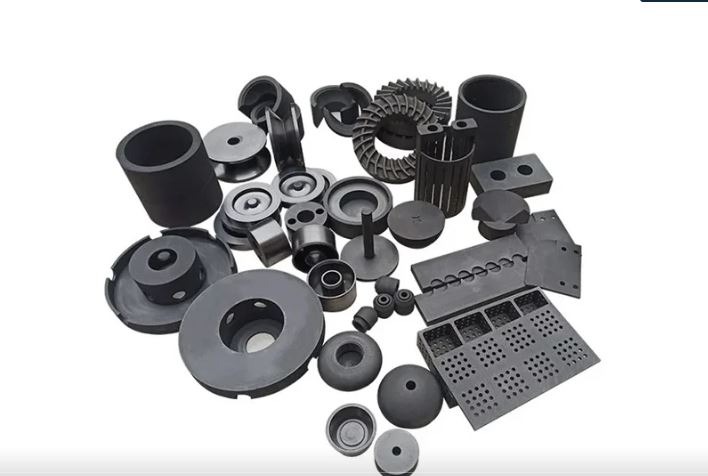
Bulk purchasing can reduce the per-unit cost of industrial components, but ordering large quantities also increases the consequences of choosing the wrong supplier.
When sourcing graphite molds, manufacturers need consistent dimensions, reliable material properties, predictable delivery, and clear communication. A supplier that performs well on a small trial order may still need to demonstrate that it can maintain the same quality at larger production volumes.
Before placing a bulk order, evaluate the supplier from both technical and commercial perspectives.
Start With a Sample or Trial Order
A sample order can provide useful information about the supplier’s capabilities before you commit to a larger quantity.
Inspect the sample for:
- Dimensions
- Surface finish
- Machining quality
- Material consistency
- Packaging
- Overall workmanship
If possible, test the mold under representative operating conditions.
A successful trial can provide greater confidence before moving to larger quantities.
Verify Material Specifications
Graphite is available in many grades, and selecting the wrong material can affect performance.
Ask the supplier to provide relevant material information, such as purity, density, grain structure, strength, and thermal properties.
The required specification should be based on the intended manufacturing process rather than a generic statement such as “high-quality graphite.”
Confirm Dimensional Consistency
When ordering multiple molds, consistency between individual units is critical.
A small dimensional difference may not matter in some applications but can create problems in precision manufacturing.
Ask the supplier how dimensions are measured and whether inspection data can be provided for bulk production.
Discuss Tolerances in Advance
Don’t assume that a supplier’s standard machining tolerance will automatically meet your requirements.
Clearly specify critical dimensions and tolerances in the technical drawing or purchase documentation.
If certain dimensions are more important than others, identify them clearly so the manufacturer can prioritize inspection accordingly.
Calculate the True Cost
Unit price is only one part of the total purchasing cost.
Also consider:
- Tooling charges
- Sample costs
- Packaging
- Shipping
- Import expenses
- Rejection rates
- Replacement costs
- Lead times
A slightly higher unit price may be worthwhile if it provides better consistency and lower failure rates.
Check Production Capacity
Before placing a bulk order, make sure the supplier has sufficient production capacity.
Ask about current production schedules and expected lead times. If you need recurring orders, discuss how the supplier handles repeat production.
A supplier that can deliver one small order quickly may not necessarily be prepared for significantly larger volumes.
Review Quality Control Procedures
Quality control becomes increasingly important as order volume grows.
Ask whether the supplier performs inspections during production and after machining. For critical components, you may also want documentation confirming that the finished products meet agreed specifications.
Clear acceptance criteria should be established before production starts.
Protect Against Supply Interruptions
If graphite molds are critical to your production line, supply continuity matters.
Consider maintaining an agreed reorder process and discussing expected lead times before the initial bulk order.
It may also be useful to establish a standard product specification so future orders can be reproduced consistently.
Don’t Ignore Packaging
Bulk shipments involve more handling than individual shipments. Packaging should protect machined graphite components from impact and excessive movement during transportation.
Ask the supplier how products are packed and whether smaller or fragile components receive additional protection.
Evaluate Communication
A supplier’s communication style can tell you a lot about how smoothly a long-term relationship may work.
During the quotation stage, pay attention to whether the supplier asks relevant technical questions or simply provides a price.
A supplier that understands your operating temperature, dimensions, graphite grade, tolerances, and production requirements is generally better positioned to support a specialized order.
Consider a Broader Graphite Product Range
If your company regularly purchases graphite components, it can be efficient to work with a supplier capable of manufacturing multiple product types.
In addition to molds, industrial applications may require graphite plates, rods, crucibles, or custom-machined components.
You can explore graphite mold supplier options while also reviewing other graphite products that may fit your manufacturing requirements.
Bulk Order Checklist
Before approving the purchase, confirm:
- Material grade
- Graphite specifications
- Dimensions
- Critical tolerances
- Surface finish
- Sample approval
- Inspection procedure
- Quantity
- Unit price
- Tooling charges
- Packaging
- Shipping terms
- Production lead time
- Replacement policy
Getting these details in writing can prevent misunderstandings later.
Conclusion
Choosing a graphite mold supplier for bulk orders requires careful evaluation of both product quality and supply capabilities.
A good supplier should be able to provide consistent graphite material, accurate machining, reliable inspection, reasonable lead times, and clear technical communication.
Testing a sample before committing to large quantities is one of the most practical ways to reduce risk. Once the supplier demonstrates consistent quality and reliable delivery, a long-term purchasing relationship becomes much easier to manage.