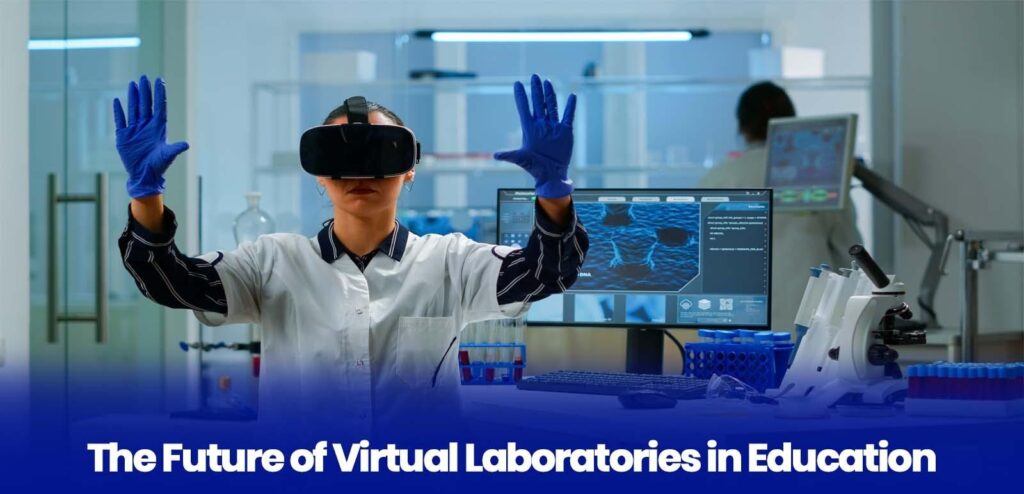
Education is undergoing a major transformation in how students learn and interact with academic content. One of the more exciting developments in modern education is the development of virtual laboratories. Through these digital environments, students can conduct experiments, research scientific ideas, and discuss findings using online tools rather than conventional physical laboratories. With advances in technology, virtual laboratories are likely to play an even greater role in the future of education.
Virtual laboratories provide students with opportunities to practice hands-on without the constraints of space, equipment availability, or safety concerns. Also known as virtual labs, the combination of simulation technology, interactive learning platforms, and digital collaboration tools is transforming the way science and technical subjects are delivered in schools and universities worldwide.
Virtual Laboratories: What Are They?
Virtual laboratories: Computer-based laboratories in which students conduct experiments using simulations and interactive models. These simulators model real-life laboratory processes so that learners can manipulate variables, observe reactions, and discuss results as they would in a real laboratory.
Unlike physical labs, virtual labs allow students to repeat experiments multiple times without the risk of wasted materials or safety hazards. For example, Chemistry students can simulate complex chemical reactions, and physics students can study motion, energy, and forces interactively.
These digital environments are particularly useful for institutions that may not have access to expensive laboratory equipment. Virtual labs ensure that students can still gain valuable practical experience even when physical resources are limited.
Increasing Student Active Learning.
Interactive learning is one factor that makes virtual laboratories effective. Instead of passively reading about scientific theories, students can actively engage in simulations that demonstrate how these theories work in practice.
For example, biology students can study digital models of cells and biological processes such as cell division. Environmental science students can model changes and experiment with the effects of pollution and climate change. Such experiences make learning interesting and unforgettable.
By offering interactive experiences, virtual labs can help students develop a better understanding of scientific concepts. They foster curiosity and exploration, which are essential qualities for successful learning in the sciences and technology.
Communicating with Online and Hybrid Learning.
The growth of online and hybrid education has increased demand for digital tools to support remote learning. Virtual laboratories are a key component of many online science programs, as they provide students with hands-on experiences that complement theoretical instruction.
Students who take online science courses can use virtual labs to conduct experiments, analyze data, and submit reports, just as in a traditional lab course. This integration ensures that online learners receive a comprehensive educational experience.
Nevertheless, online learning may also pose challenges for students who find it difficult to manage more than one course with multiple deadlines. In some scenarios, overburdened students may search online for academic help and encounter services that offer to pay someone to take my online class when coursework is difficult to manage. While such services are available, educational institutions are increasingly focusing on enhancing digital learning environments to support student success.
Giving Students Preparation for Future Careers.
Virtual laboratories also help prepare students for a career in science, engineering, and technology. Many modern industries have become highly dependent on digital simulations and data analysis tools; therefore, the application of virtual laboratory experience in professional settings is highly relevant.
Students who work with virtual labs learn how to analyze experimental data, interpret results, and make evidence-based decisions. These skills are important for positions in research, healthcare, engineering, and environmental science.
In academic environments where assessments are conducted online, students at times feel pressured during examinations and seek shortcuts by searching for phrases such as do my online exam when they are concerned about their performance. Nevertheless, learning institutions are adopting secure digital platforms and proctoring technologies to promote fairness and academic integrity.
Promoting Self-directed Scientific Inquiry.
Another important benefit of virtual laboratories is the possibility of independent exploration. Students can test different variables, formulate new hypotheses, and repeat experiments as many times as necessary to understand the results fully.
These freedoms lead to deeper reflection on the scientific process and on the student’s ownership of learning. They can research topics of interest to them and formulate their own research questions in the virtual lab environment.
In very demanding science programs, students may feel overwhelmed by assignments and practical work, which can lead them to seek assistance via phrases such as do my science class. While academic support services are available, the objective of the virtual laboratories is to encourage students to work independently and build the experience and confidence necessary for success.
Conclusion
Virtual labs in education have a bright and changing future. Virtual labs are changing the way students learn scientific experimentation by offering an interactive, accessible, and cost-effective learning environment.
These online platforms enhance student interaction, facilitate online learning, and prepare students for technology-focused jobs. The virtual laboratories will become increasingly realistic and functional as technologies such as virtual reality and artificial intelligence continue to evolve.
Finally, virtual laboratories are an excellent step toward making science education more accessible, innovative, and relevant to students worldwide. Through these tools, the next generation of learners will have greater opportunities to explore, experiment, and develop skills to succeed in the future of science and technology.