As data centers continue to scale in bandwidth and complexity, the choice of physical layer infrastructure has become increasingly strategic. While multimode fiber once dominated short-reach deployments, a clear shift toward single-mode solutions is now underway. Among these, LC UPC duplex OS2 fiber has emerged as the default option for modern data center interconnects, driven by its flexibility, scalability, and long-term cost efficiency.
The Shift Toward Single-Mode Fiber
Historically, multimode fiber (MMF) was widely used in data centers due to its lower initial transceiver costs and ease of deployment for short distances. However, as network speeds have evolved from 10G to 25G, 100G, and now 400G and beyond, the limitations of multimode fiber have become more apparent.
Distance constraints, modal dispersion, and the need for parallel optics (such as MPO-based solutions) make MMF less efficient in high-speed environments. In contrast, OS2 single-mode fiber supports significantly longer distances with minimal signal degradation and is well-suited for serial transmission technologies used in modern optics.
As a result, many new data center builds and upgrades are standardizing on single-mode infrastructure from the outset.
Why LC UPC Duplex OS2 Stands Out
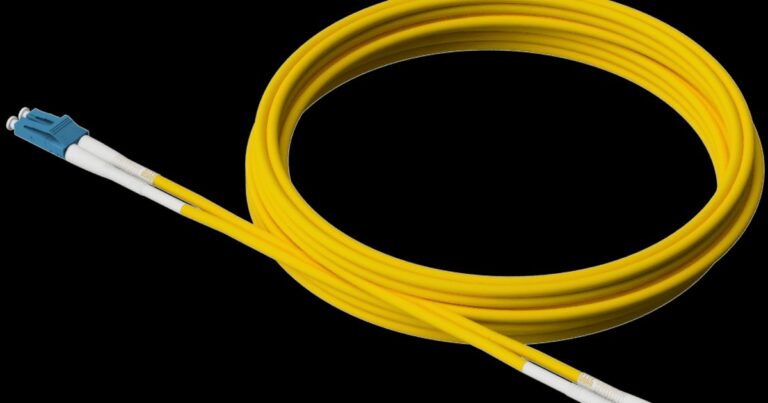
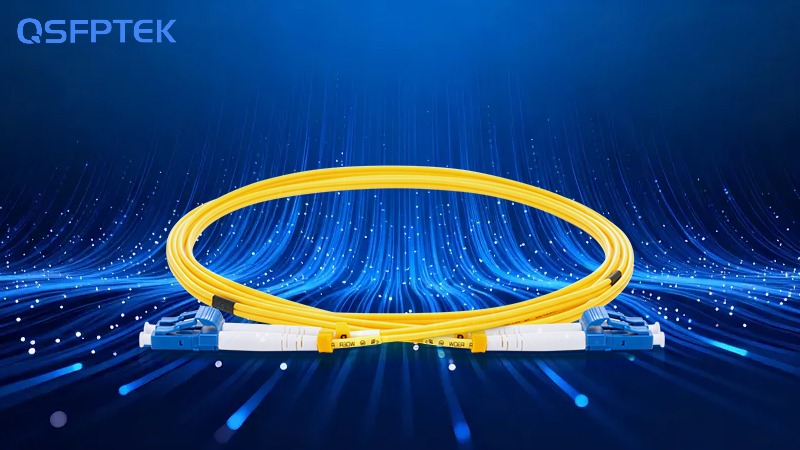
Within single-mode deployments, LC UPC duplex connectors have become the dominant interface. Their compact form factor enables high port density on switches and patch panels, which is critical in space-constrained data center racks.
The UPC (Ultra Physical Contact) polish provides low insertion loss and acceptable return loss for most data center applications, making it a practical choice for short- to medium-reach links. Compared to APC connectors, which are typically used in long-haul or PON networks, UPC connectors are easier to manage and more widely compatible with standard transceivers.
The duplex configuration further simplifies connectivity. Unlike parallel fiber solutions that require multiple fibers for a single link, duplex LC connections use just two fibers—one for transmit and one for receive. This reduces cabling complexity and improves overall manageability.
Applications in Modern Data Centers
LC UPC duplex OS2 fiber is now widely used across various layers of data center architecture. In leaf-spine topologies, it supports inter-switch links as well as connections between switches and high-performance servers. It is also commonly deployed in cross-connect areas and structured cabling systems.
With the adoption of high-speed optical modules such as 100G DR, 400G FR4, and emerging 800G technologies, duplex single-mode fiber provides a clean and scalable path forward. These modules are designed to operate over single-mode fiber using fewer wavelengths or lanes, aligning perfectly with LC duplex connectivity.
Additionally, the ability to support both short and longer distances, ranging from a few meters to several kilometers, makes OS2 fiber highly versatile. This flexibility allows operators to standardize on a single cabling type across the entire facility.
Comparing OS2 with Multimode Fiber
From a long-term perspective, OS2 fiber offers several advantages over multimode alternatives. While MMF may still have a lower upfront cost in some cases, the gap has narrowed significantly as single-mode optics become more affordable.
More importantly, OS2 eliminates the need for frequent infrastructure upgrades as speeds increase. Multimode deployments often require new cabling or complex parallel optics when transitioning to higher data rates, whereas single-mode fiber can support multiple generations of technology without replacement.
This deploy once, upgrade many times approach is a key reason why hyperscale and enterprise data centers alike are moving toward OS2 as a standard.
Conclusion
LC UPC duplex OS2 fiber has become the default choice for data center single-mode links due to its balance of performance, simplicity, and scalability. As network demands continue to grow, organizations are prioritizing infrastructure that can adapt to future speeds without significant redesign. By enabling high-density, cost-effective, and future-ready connectivity, LC UPC OS2 fiber stands at the center of this transition toward more efficient and sustainable data center networks.